
Why School Districts Can Matter More Than City Limits for Property Taxes

When buying a home in the Des Moines metro area, many buyers focus on the city — thinking that city limits determine property taxes. But in Iowa, and especially in fast-growing suburbs like Ankeny, Waukee, and Des Moines, the school district you live in often has a bigger impact on property taxes than the city itself.
Here’s why school districts matter and what buyers need to know.
How Property Taxes Are Calculated in Iowa
Property taxes are based on several factors:
Assessed value of your home
Local tax levy rates, including city, county, school district, and special districts
State rollback percentages
While the city sets its portion of the levy, school districts often make up the largest portion of your total property tax bill.
School District Levies Are Key
Each school district determines its funding needs through voter-approved levies. These levies fund:
Teacher salaries and staff
School operations and maintenance
Facility upgrades and new construction
Technology and programs
Because of this, two homes in the same city can have very different property tax bills depending on which school district they are in.
Example: Ankeny vs Waukee vs Des Moines
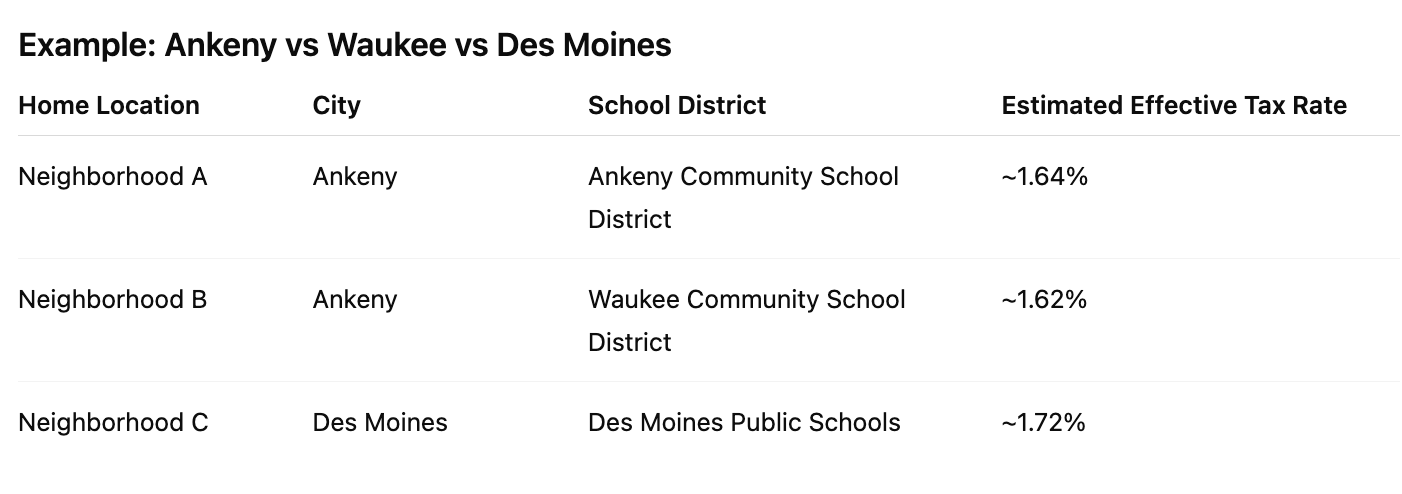
School districts create slightly different property taxes. Meanwhile, a home in Des Moines city limits may have higher property taxes due to the city’s levies combined with the Des Moines Public Schools district.
Why This Matters for Homebuyers
1. Monthly Budgeting
Your school district impacts your monthly mortgage payment because property taxes are included in escrow. Even a small difference in tax rates can add hundreds of dollars per year.
2. Resale Value
Homes in top-rated school districts often retain value better and sell faster. This can offset slightly higher property taxes.
3. Long-Term Tax Planning
School district levies are often stable but may increase over time for growth and facility upgrades. Understanding your district helps you anticipate future tax bills.
Common Misconceptions
“City equals taxes.” Not always — city levies are only one portion of your total tax bill.
“A bigger city means higher taxes.” Tax rates depend on city budgets AND the overlapping school district.
“All neighborhoods in a city are taxed the same.” Different school districts or bond measures can create variations.
How to Check Your School District Tax Impact
Before buying, you should:
✅ Check the home’s assessed value and previous tax bill
✅ Identify the school district boundaries
✅ Ask your lender for a tax-inclusive mortgage estimate
✅ Work with a local real estate agent familiar with district-based differences
Final Thoughts
For homebuyers in the Des Moines metro area, school districts often matter more than city limits when it comes to property taxes. While the city contributes to your total tax bill, the school district levy typically makes up the largest portion — and can significantly affect affordability, budgeting, and long-term investment.
When buying a home, consider both the city and the school district to make the smartest financial decision for your family.
👉 If you’re planning to buy in Ankeny, Waukee, or Des Moines, our team can help you compare property taxes, school districts, and neighborhoods to find the right fit for your goals.