

When buying a home in the Des Moines, Iowa metro area, property taxes are an important factor to consider. Two of the fastest-growing and most popular areas for buyers are Polk County and Dallas County. While both counties offer excellent schools, new construction, and thriving communities, property taxes can vary — sometimes significantly — depending on the county and city you choose.
Here’s what buyers need to know before making a decision.
How Property Taxes Are Calculated in Iowa
Property taxes in Iowa are based on:
Assessed value of the home
Local tax levy rates (city, county, school, and special districts)
State rollback percentage
School district funding needs
Each county and city sets its own portion of the property tax bill, and differences in local levies can make the effective tax rate vary from place to place.
Polk County Property Taxes
Polk County is home to cities like Des Moines, Ankeny, West Des Moines, and Urbandale. Key things buyers should know:
Median effective property tax rate: ~1.63–1.69% (ownwell.com)
Home prices in Polk County vary widely — older neighborhoods in Des Moines may have lower purchase prices but slightly higher tax rates.
Property taxes fund city services, county operations, and top-rated school districts.
Example:
A $325,000 home in Ankeny (Polk County) could have an estimated property tax bill of $5,300–$5,500 per year, depending on the school district and local levies.
Dallas County Property Taxes
Dallas County has seen rapid growth, especially in cities like Waukee, West Des Moines (partially), and Clive. Here’s what buyers should know:
Median effective property tax rate: ~1.60–1.65% (ownwell.com)
Newer construction is common, which sometimes results in lower initial property assessments and lower first-year taxes.
The area’s strong school districts and expanding infrastructure can influence future tax rates.
Example:
A $325,000 home in Waukee (Dallas County) could have an estimated property tax bill of $5,200–$5,350 per year.
Key Differences Between Polk and Dallas Counties
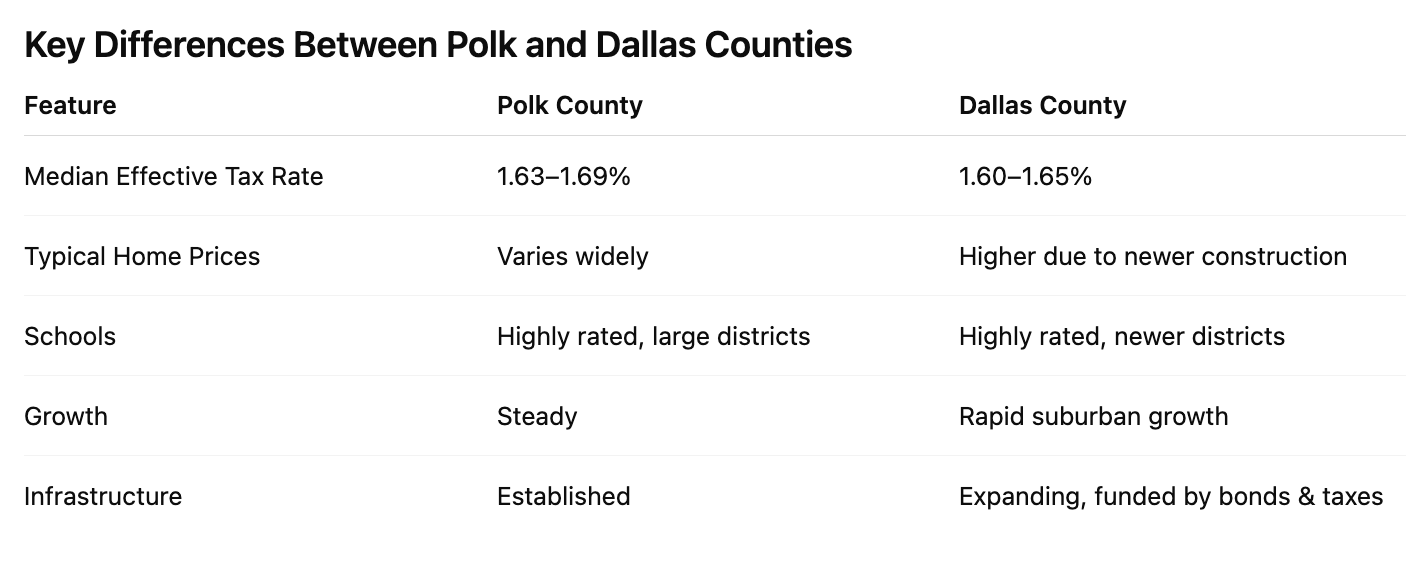
Takeaway: While the differences in effective tax rates may seem small, they can add up — especially for higher-priced homes or long-term ownership.
What Buyers Should Consider
School Districts Matter – A top-rated district can influence both property taxes and resale value.
New Construction vs Older Homes – New homes may have slightly lower first-year taxes but could increase as assessed value rises.
City vs County Levies – City-specific services and levies vary between cities, even within the same county.
Long-Term Affordability – Factor in potential tax increases due to reassessments, bond measures, or growth-related infrastructure needs.
How to Estimate Property Taxes
Before making an offer, buyers should:
✅ Review the property’s previous tax statement
✅ Ask your lender for a monthly payment estimate including taxes
✅ Check the school district and city levies
✅ Work with a local real estate agent familiar with Polk and Dallas County differences
Final Thoughts
Both Polk County and Dallas County offer excellent options for homebuyers in the Des Moines metro area. While Dallas County often has slightly lower effective property tax rates, Polk County offers well-established communities and a wide range of housing options.
When comparing homes, it’s important to consider property taxes, home prices, schools, and lifestyle preferences together.
If you’re thinking about buying in Polk or Dallas County, our team can help you compare property taxes, estimate monthly payments, and find the right home for your goals.