
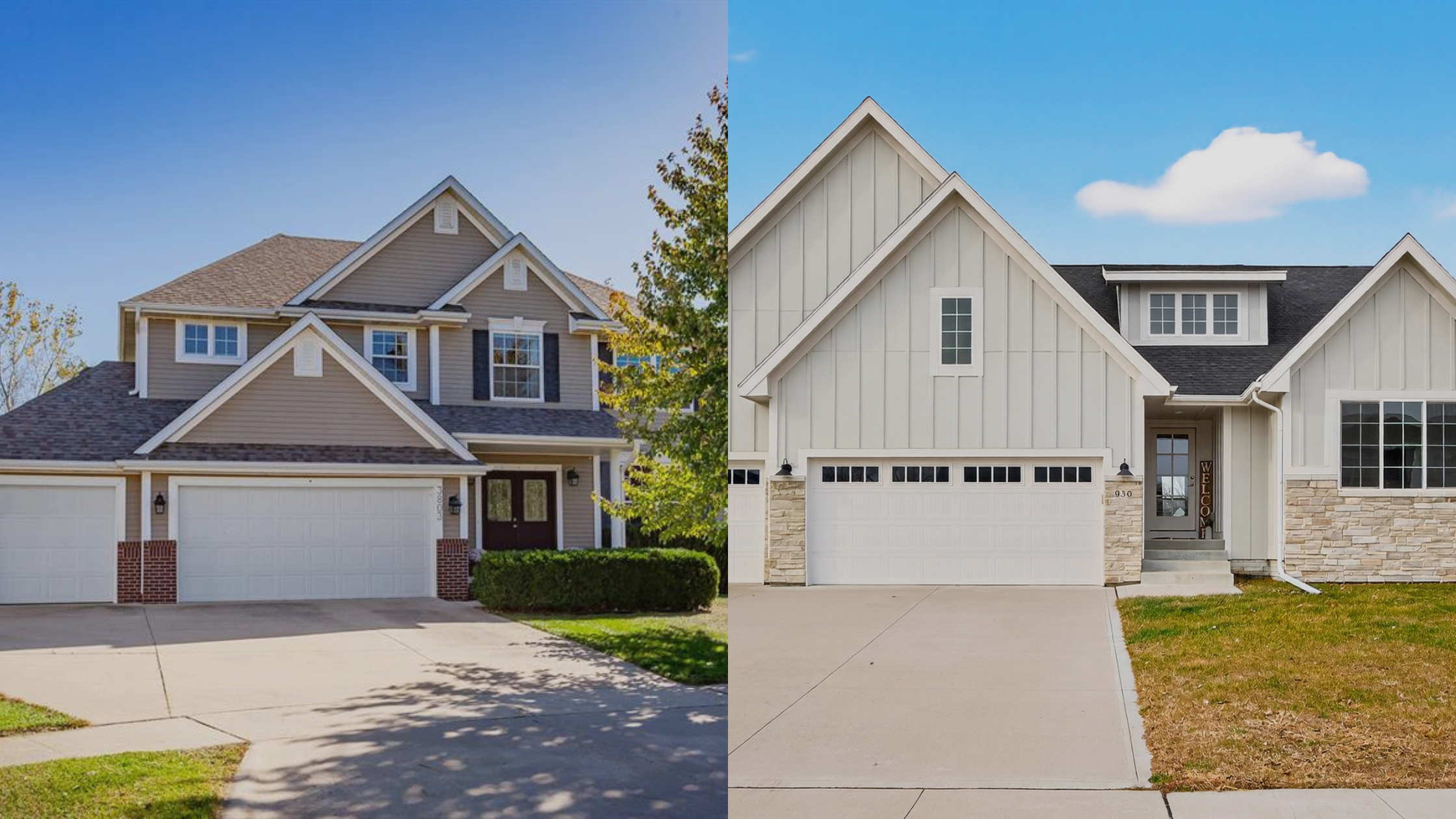
Would you rather choose your cabinets and flooring or move into a home with a finished basement and an established backyard?
When buying a home in Ankeny, Iowa, deciding between new construction and an existing home often comes down to those everyday preferences.
Both can be a great choice. The better fit depends on your budget, timeline, preferred location, and how much work you want to take on after moving.
Here’s how to compare your options.
First, Understand Your New Construction Options
Buying new construction doesn’t always mean designing a home from the ground up.
You may encounter several options:
A completed spec home: A builder-selected home that is finished and available to purchase.
A home under construction: Depending on its progress and the builder’s policies, some selections may still be available.
A build-to-order home: You choose from a builder’s plans and available options.
A custom home: You work with a builder to create a home with more flexibility in its design and specifications.
These paths involve different timelines, costs, and levels of involvement. Before comparing new construction with existing homes, clarify which type of new construction you’re considering.
Compare the Total Cost, Not Just the List Price
Two homes with similar asking prices may require very different spending after closing.
With new construction, ask exactly what the price includes. Depending on the home and builder, you may need to budget for items such as:
Window coverings.
A refrigerator, washer, or dryer.
Landscaping beyond the included allowance.
A fence.
A deck or patio upgrade.
Finishing the basement.
Changes to standard fixtures or finishes.
An existing home may already include many of those features. However, you may also need funds for painting, flooring, repairs, or replacement equipment.
Compare what each home will cost to purchase and make functional for your household. A lower list price doesn’t always mean a lower total investment.
New Construction May Offer More Personalization
One of the biggest attractions of building is the opportunity to choose how your home looks and functions.
Depending on the builder and construction stage, you may be able to select cabinets, countertops, flooring, lighting, and other finishes. Some builders also offer layout modifications.
That flexibility can be valuable if you have specific priorities, such as a larger pantry, a dedicated office, or a particular kitchen layout.
But selections can increase the price quickly. Ask which choices are standard, which cost extra, and when decisions become final.
For an existing home, you’ll generally be working with the layout and finishes already there. You can make changes over time, but consider whether those updates are practical and affordable before buying.
Existing Homes Let You Evaluate the Finished Product
When you tour an existing home, you can walk through the actual rooms, look out the windows, and experience how the spaces connect.
You can also see the current backyard, neighboring homes, and much of the surrounding streetscape.
With a home that hasn’t been built, you may be making decisions using plans, renderings, samples, or a model home. Those tools are helpful, but ask which model features are included in your purchase and which are upgrades.
A completed new construction home can offer the best of both experiences: new materials and systems, with a finished layout you can walk through before deciding.
Maintenance Looks Different for Each Option
New construction comes with new materials, appliances, and mechanical systems. That can reduce the likelihood of certain age-related replacements early in ownership.
It doesn’t mean the home will require no maintenance or follow-up.
Ask about the builder’s warranty, what it covers, how long different coverage lasts, and how service requests are handled. Builder warranties have limits and exclusions, so review the actual documents rather than relying on a general promise.
With an existing home, pay attention to the age and condition of major components, including the roof, heating and cooling equipment, windows, and water heater.
An older home with well-documented updates may have a different maintenance outlook than one with several original systems.
For either option, discuss independent inspection opportunities and timelines before signing.
Your Moving Timeline Matters
If you need to move by a specific date, the home’s availability may narrow your choices.
An existing home or completed new construction property may offer a more predictable path to closing, subject to the agreement, financing, and other requirements.
A home that still needs to be built introduces more variables. Weather, materials, scheduling, and changes during construction can affect completion.
Before committing, ask:
Is the completion date an estimate or a contractual commitment?
What happens if construction takes longer?
When will you need to make deposits or pay for upgrades?
How will the timing work with your mortgage rate lock?
What is the plan if you need to sell your current home first?
The Consumer Financial Protection Bureau also recommends understanding upfront builder deposits and comparing financing options when purchasing a home that isn’t yet built.
Think About the Neighborhood You Want
The home itself is only part of the decision.
Do you want mature trees and an established setting? Would you prefer a newer development where the surrounding homes have a similar age and style?
As you compare locations in Ankeny, consider your routes to work, schools, shopping, parks, and other regular destinations. Think about whether proximity to Uptown Ankeny, Prairie Trail, or interstate access matters to your daily routine.
In a developing neighborhood, ask about nearby construction, future phases, planned roads, and any available information about adjacent land.
For either type of home, verify school assignments, association requirements, and property boundaries instead of making assumptions based on the neighborhood name.
Look Closely at Energy Efficiency
A new home may include efficient equipment and construction features, but age alone doesn’t tell the whole story.
Ask about insulation, windows, heating and cooling equipment, and any documented performance testing or energy certification.
Existing homes may also have significant efficiency improvements. Ask for information about upgrades and available utility history, remembering that the previous owner’s usage may differ from yours.
Energy performance depends on the home’s features and condition. The Department of Energy offers resources for evaluating and improving both new and existing homes.
Compare Finished Space and Outdoor Features
A new home with an unfinished basement may offer room to grow. An existing home with a finished lower level may give you space you can use immediately.
Compare the areas you’ll actually use, including:
Bedrooms and bathrooms.
Finished living space.
Storage.
Office or flex space.
Garage dimensions.
Decks, patios, and yard features.
If you plan to finish a basement later, get a realistic estimate rather than assuming it will be an inexpensive project.
Outside, consider the value of an established lawn, mature trees, fencing, and usable gathering areas. Those features take time and money to create.
Remember Property Taxes and Association Costs
For either option, ask your lender to review the property tax estimate and include applicable association dues in your budget.
With new construction, confirm whether the tax information reflects the completed home or an earlier assessment of the lot or partially finished property. The current bill may not represent the ongoing cost once the home is fully assessed.
Also, review association documents and applicable covenants for restrictions that matter to you, such as fencing, sheds, exterior changes, or parking.
Which Type of Home Is Right for You?
New construction may be a strong fit if you value newer systems, want input on selections, and can work with the builder’s timeline and process.
An existing home may fit better if you want an established setting, finished features you can use immediately, or the ability to evaluate the property exactly as it stands.
You may also find that a completed new construction home gives you the combination you want.
Keep both options open until you’ve compared specific properties. Your priorities may become clearer once you see what your budget buys in each category.
Find the Right Home in Ankeny
The right choice should support how you want to live, what you can comfortably spend, and when you need to move.
Planning to buy a home in Ankeny or the surrounding Central Iowa communities? Contact The Hokel Real Estate Team at Century 21 Signature Real Estate. We’ll help you compare new construction and existing homes, understand what’s included, and find an option that fits your goals.